
🕉 Why Is Jyotish Astrology Different from Western Astrology…
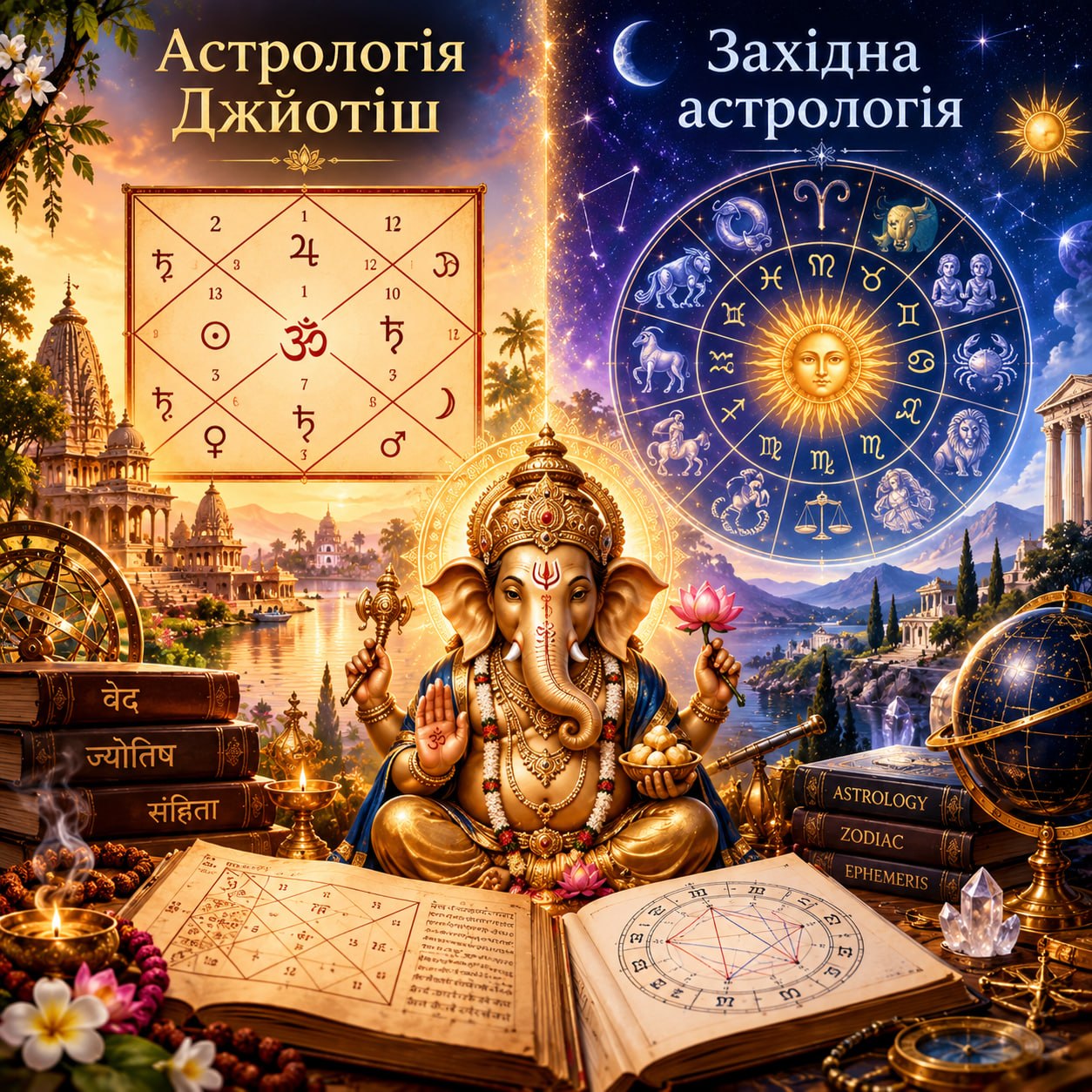
🕉 Why Is Jyotish Astrology Different from Western Astrology?
Have you noticed that your Western horoscope assigns you to one zodiac sign, while Vedic Jyotish astrology assigns you to another?
The reason is that Western astrology and Jyotish astrology use different reference systems for the positions of the planets and zodiac signs. To understand this difference, let’s look at two concepts: the tropical and sidereal zodiacs.
The Tropical Zodiac — Western Astrology
The tropical system is linked to the changing seasons and the vernal equinox. It is the system primarily used in Western astrology. The beginning of Aries is defined by the vernal equinox, when the Sun crosses the celestial equator and astronomical spring begins in the Northern Hemisphere.
In other words, the tropical zodiac is based on Earth’s seasonal cycle.
The Sidereal Zodiac — Vedic Jyotish astrology uses the sidereal system, which is based on the actual positions of the zodiac signs relative to the stars. Unlike the tropical system, it accounts for the difference caused by the slow shift of Earth’s axis. This phenomenon is called precession. As a result, the positions of the planets in the signs in Jyotish usually differ from their positions in Western astrology.
What is the difference?
There is an angular difference between the tropical and sidereal zodiacs, called the ayanamsha.
Today, it is approximately 24 degrees, although the exact value depends on the date and the chosen calculation system. For example, if the Sun is at 15° Aries in the tropical zodiac, then in the sidereal zodiac, with an ayanamsha of about 24°, it will be approximately at 21° Pisces. That is why someone whose Western horoscope places their Sun in Aries may have their Sun in Pisces in Jyotish.
Does this mean that one system is right and the other is not?
No. These are different astrological systems, with different reference principles and their own traditions of interpretation. Jyotish astrology has its own profound philosophy, system of calculations, and methods of horoscope analysis: nakshatras, dashas, vargas, yogas, and many other tools. Western astrology also has its own methods and traditions.
Jyotish astrology is not simply a different set of zodiac signs. It is a holistic system that considers the natal chart, periods of life, karmic tendencies, and auspicious timing for important events.
An important feature of Jyotish is its close connection with spiritual practices. It is not only a system for interpreting horoscopes, but also part of Vedic culture, which views human life through the lens of karma, dharma (life purpose), and spiritual development. In the Jyotish tradition, astrological knowledge is combined with spiritual practices: mantras, meditation, prayer, worship of deities, charity, and practices of self-discipline.
The purpose of Jyotish is not simply to learn what the future may bring, but to better understand yourself, recognize your life lessons, and follow your own path with greater wisdom and awareness. #ZoryanaTreasury